Woody 99 - Sudoku Block Puzzle
- 4.7
- Rating
- 5.00M
- Installs
- Free
- Price
 Analysis by App-foxy
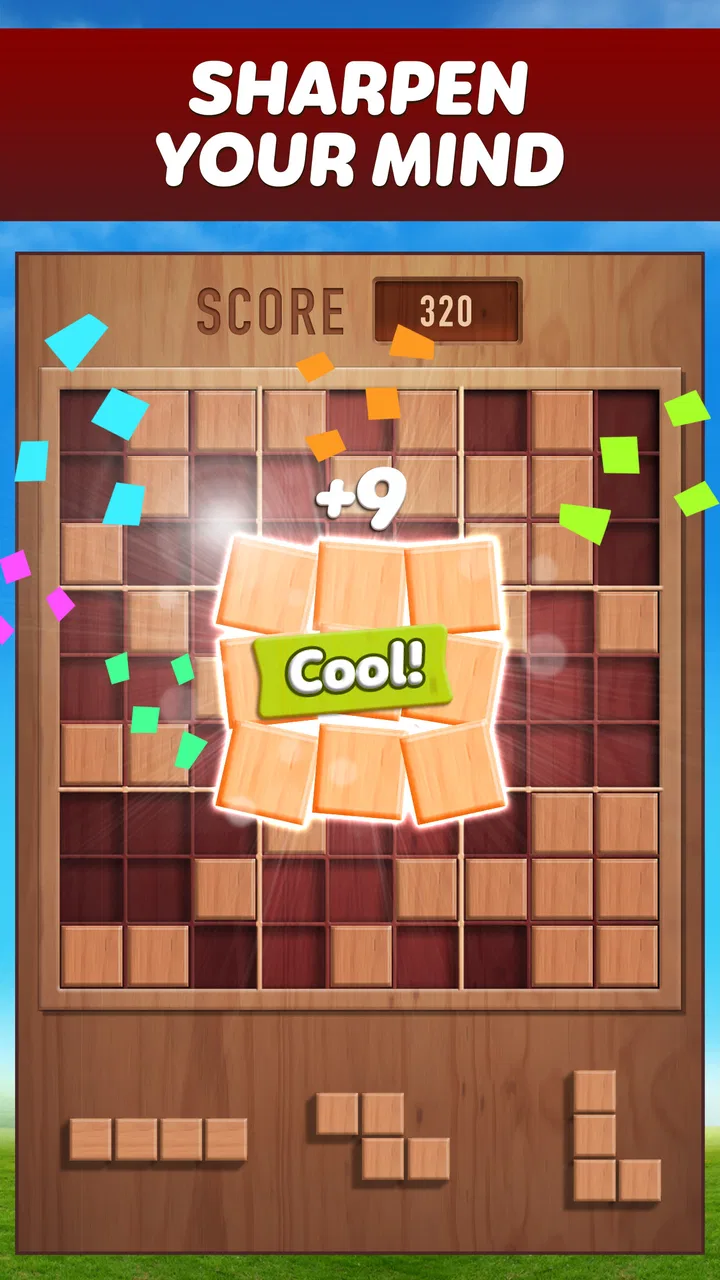
I approached Woody 99 - Sudoku Block Puzzle expecting a simple board game for short breaks, and that is exactly where it makes the most sense. It combines the familiar placement of wooden blocks with a Sudoku-like clearing goal, creating a puzzle that is easy to understand but not always easy to solve well. I found myself opening it for a few minutes and then staying longer because each move affects the space available for the next several turns.
This is a free board game from Athena.Studio, rated for Everyone. It has reached over 5 million installs, with an average rating of 4.7 from around 53 thousand ratings. Those figures suggest that its straightforward format has broad appeal, but popularity alone does not tell you whether it fits your habits. The more useful question is whether you want a calm, turn-based puzzle or something faster, more competitive, or more varied.
What to judge before choosing it
The first decision is about the kind of concentration you enjoy. This game does not ask me to react quickly or memorize complicated rules. Instead, I look at the shapes available, study the open spaces, and decide whether to complete a row, column, or larger arrangement now or preserve room for a better move later. That makes it suitable for relaxed attention, but less suitable if I want action, story, or constant novelty.
You May Also Like

 AccuWeather: Weather Radar
AccuWeather Review: A Quick, Clear Forecast for Everyday Decisions
For everyday plans, the best forecast is the one you can understand quickly. AccuWeather makes rain timing, radar, and local conditions easy to act on, with a few trade-offs.

 Hill Climb Racing
Why Hill Climb Racing Still Turns Crashes Into One More Run
A tiny car, a bumpy hill and one more upgrade: Hill Climb Racing keeps resurfacing because its simple chaos makes every near-miss feel personal.

 AliExpress - Shopping App
AliExpress Makes Global Shopping Feel Personal, but Shoppers Bear the Risk
AliExpress turns a global marketplace into a pocket-sized discovery engine. Its reach is useful, its shopping loop compelling, and its trade-offs easy to miss.

 Lords Mobile: Kingdom Wars
Lords Mobile Is a Kingdom-Building Routine, Not a Quick Match
A case-by-case verdict on the building, battles, device demands, and social commitments that make Lords Mobile rewarding for some players and exhausting for others.

 PDF Scanner app - TapScanner
TapScanner Makes Paperwork Easier to Capture, Check, and Share
TapScanner makes scanning with a phone feel less like a rescue operation and more like a dependable step in getting work done. Its capture tools are useful, though not flawless.

 Block Blast!
 Shows How Much a Puzzle Game Can Leave Out
A quiet grid game shows why puzzle players increasingly value instant clarity, repeatable skill and low-pressure play—and where the genre still needs to catch up.
More From Our News Desk
View All News


The second decision is how much pressure I want from a puzzle. The wooden visual style gives the game a gentle personality, yet the board can become surprisingly restrictive when I place pieces without planning. A move that looks useful in isolation may block the only area where a larger shape could fit. I learned to judge empty space as carefully as the blocks themselves, which is the central skill that separates a comfortable session from an early dead end.
I also consider how I normally use mobile games. This is a good candidate for a waiting room, a commute, or a quiet pause between tasks because turns are self-contained. I can stop thinking about the board and return later without needing to remember a plot or coordinate with another player. On the other hand, anyone looking for social competition, a campaign, or a strong sense of progression may find the format too focused.
The game runs on Android devices using version 7.0 or later, and its current version is 2.2.17. That makes compatibility a practical point to check before installing, especially on an older phone or tablet. It is also free to start, while optional in-app purchases range from $0.99 to $49.99 per item. I would treat that pricing range as a reason to review purchase settings if children use the device, even though the content rating is Everyone.
Why the board feels simple at first
The appeal comes from a small set of actions that quickly becomes a planning exercise. I place a block, complete a line when possible, and try to keep the board flexible. There is no need to learn a long rulebook. The challenge grows from the relationship between the pieces rather than from new controls or complicated systems.
That simplicity makes the opening moments welcoming. I can pick it up without preparation, understand what the board is asking me to do, and start making decisions immediately. The more interesting part arrives when several possible placements appear useful. Completing one line may clear space, but using a smaller piece in another area might prevent a much worse blockage later.
I especially like that the game rewards looking beyond the next move. My practical habit is to scan the available shapes before placing anything, then identify the largest awkward piece and protect a space where it might fit. This is more effective than automatically clearing the first line I see. It is a small change in approach, but it turns random placement into deliberate play.
Where it wins against familiar board puzzles
Compared with traditional Sudoku, this game is more tactile and less dependent on numbers. I do not need to inspect a grid for repeated digits or calculate candidates for every square. The spatial challenge is immediate: shapes either fit or they do not, and clearing lines creates room for future decisions. If number-based Sudoku feels too formal, this version offers a softer entry into structured puzzle solving.
Compared with match-three games, the satisfaction is slower and more thoughtful. There is no need to chase a chain before a timer runs out. I can pause over a placement and consider its consequences. That makes it better for a calm break, although people who enjoy frequent visual effects and quick combos may find it restrained.
It also differs from falling-block games. The pieces do not demand rapid rotation and instant reactions in the same way. I have time to inspect the board, which reduces physical pressure but increases responsibility for planning. A mistake feels less like a reflex failure and more like a decision I could have avoided.
Against classic tabletop board games, the advantage is convenience. I do not need opponents, a physical surface, or a long setup. I can play alone whenever I have a spare moment. The trade-off is that the digital format cannot provide the conversation, bluffing, or shared tension that makes multiplayer board games memorable.
Small habits that make a real difference
My most useful habit is to avoid filling the center too quickly. A central placement can appear efficient because it touches several possible lines, but it may also divide the board into narrow pockets. I try to preserve connected open areas whenever possible, since connected space gives more options for irregular shapes.
A second useful habit is to treat line clearing as a tool rather than an automatic goal. If a line can be completed without damaging the rest of the board, I take it. If completing it forces an awkward leftover space, I sometimes wait. The best move is not always the one that produces the most immediate clearing; it is the one that leaves the board easier to manage afterward.
I also recommend checking the full set of available pieces before committing. When I focus only on the piece I want to place, I can accidentally create a board that rejects the next shape. Looking at the whole selection encourages a different question: which piece is hardest to accommodate, and where can I keep a safe landing area for it?
These habits are particularly helpful during a short session when I am tempted to play quickly. The game feels relaxing, but rushing still has consequences. Taking a few seconds to read the board is enough to improve decisions without turning a casual game into a serious study exercise.
When the relaxed style becomes a limitation
The same calm design that makes this game approachable may feel repetitive to some players. The core loop remains centered on placing blocks and managing space, so it does not offer the variety of a game built around levels, characters, exploration, or changing objectives. I would not choose it as my only mobile game if I needed constant new content or a strong narrative reason to return.
It can also be frustrating for players who prefer clear control over the outcome. Even with careful planning, the available shapes can force difficult choices. I sometimes reach a point where every option has a drawback, and the board becomes a test of damage control rather than a clean puzzle solution. That uncertainty is part of the challenge, but it will not appeal to everyone.
Another limitation is the lack of an obvious social role in my routine. If I want to challenge a friend, compare turns directly, or share a cooperative goal, I would look toward a multiplayer board game instead. This title works best as a personal focus activity, not as a replacement for a game night.
The purchase model is another consideration. Since the game is free, trying it costs nothing upfront, which lowers the barrier to entry. However, the presence of optional purchases means I would be careful about spending simply to extend a session or remove an inconvenience. For me, the right approach is to enjoy the basic loop first and decide whether any paid option genuinely improves my experience rather than buying impulsively.
A realistic everyday use case
I can easily imagine using it during a ten-minute break after finishing a task. I open the game, make a few careful placements, and stop when I need to return to work. Because the puzzle does not require a live opponent or a story sequence, I do not feel that I am abandoning anything important. That makes it less demanding than a competitive match and more engaging than scrolling through short videos.
It also fits a quiet evening when I want something interactive but not intense. I can focus on arranging the board while listening to something else, although I prefer giving the puzzle my full attention when the available space becomes tight. The game is at its best when I want a modest mental workout without the emotional investment of a difficult adventure or ranked competition.
For a child, the Everyone rating and clear placement system may make it approachable, but I would still explain that the goal is not simply to fill every gap. The useful lesson is planning: leave room, consider consequences, and do not make a quick move just because it clears something immediately. Adult supervision around in-app purchases is sensible on a shared device.
Who should choose a different category
I would point fans of classic Sudoku toward a dedicated number puzzle if they enjoy logic based on fixed clues and precise deduction. This game shares a grid-based mindset, but its challenge is spatial and more open-ended. Someone who wants a single correct solution may prefer the structure of traditional Sudoku.
I would recommend a falling-block game to players who want speed, reflexes, and increasing pressure. The slower placement here is a strength for me, but it removes the adrenaline that comes from reacting before the board fills. Likewise, a match-three title may be a better fit for anyone who wants frequent effects, quick rewards, and more immediate visual feedback.
Players who mainly choose games for progression should also think carefully. A campaign-driven puzzle game, a strategy title with unlockable systems, or a competitive board game may provide a stronger long-term reason to return. This one earns repeat sessions through the basic satisfaction of improving my decisions, not through a story or a large collection of activities.
There is also a difference between mental calm and mental challenge. Although the presentation feels relaxing, the later decisions can demand real concentration. I would not describe every session as effortless. If I am tired and want something almost automatic, I may choose a simpler matching game. If I want to think without feeling rushed, this is the better option.
What switching from another puzzle feels like
Moving from number Sudoku is easy at the rule level but different in mindset. I no longer search for missing values; I manage shapes, gaps, and future flexibility. The adjustment takes only a short time, yet the decision-making feels less deterministic. I need to become comfortable with making the best available move rather than proving that one answer is logically forced.
Switching from a match-three game requires more patience. There is less instant feedback, and a good move may be valuable because it preserves options rather than because it creates a dramatic effect. I found that the reward becomes quieter but more personal: I notice that I survived a difficult board because I planned well, not because a chain reaction rescued me.
Switching from a multiplayer board game is a larger change. There is no table talk or opponent to read, so the entire experience depends on whether I enjoy solving a spatial problem alone. The benefit is complete control over my pace. The cost is that there is no shared moment to make a routine session feel like an event.
Because the game is free to install, trying that change is relatively low risk. I would give it several sessions rather than judging it after a single board. The first game teaches the controls; the later ones reveal whether I enjoy protecting space, accepting awkward choices, and gradually improving my placement habits.
My recommendation after using it
I recommend this game to anyone who wants a free, approachable board puzzle for short, quiet sessions. It is especially well suited to players who like Sudoku-style thinking but prefer shapes over numbers, and to people who want a game that can be paused without losing the thread of a story or match.
I would skip it if my priority were multiplayer interaction, fast action, deep progression, or a wide range of modes. The central idea is focused, and that focus is both its identity and its main limitation. It does not try to be a complete entertainment platform, so the right audience is someone who values a repeatable spatial challenge.
Athena.Studio has kept the concept accessible enough for beginners while leaving room for better planning. My strongest advice is to protect open space, inspect every available piece before moving, and resist clearing a line when doing so creates a worse board. Those choices reveal the real depth hiding behind the friendly wooden appearance.
Overall, I see Woody 99 - Sudoku Block Puzzle as a dependable casual game rather than a game I would play for spectacle. Its free entry, Everyone rating, and simple controls make it easy to try, while the need to manage future space gives it more substance than the first few moves suggest. If that balance of calm presentation and careful planning sounds appealing, it is worth adding to a rotation of mobile puzzles.
FAQs for Woody 99 - Sudoku Block Puzzle
01What is Woody 99 - Sudoku Block Puzzle?
Woody 99 - Sudoku Block Puzzle is a relaxing puzzle game that combines classic block placement with Sudoku-style clearing mechanics. You place wooden-shaped blocks on a grid and try to complete rows, columns, or designated sections to remove them and earn points. The rules are easy to understand, but planning several moves ahead becomes increasingly important as the board fills up.
02How do you play Woody 99 - Sudoku Block Puzzle?
The game gives you different block shapes that must be dragged onto an empty grid. You cannot rotate every piece freely, so choosing the right position is essential. Complete full lines or smaller Sudoku-style areas to clear blocks and create space. Since there is usually no time limit, the best strategy is to think carefully, avoid filling the center too quickly, and leave flexible spaces for larger pieces.
03Can Woody 99 - Sudoku Block Puzzle be played offline?
Woody 99 - Sudoku Block Puzzle is designed as a convenient casual game for short sessions, and its core puzzle experience can generally be enjoyed without a constant internet connection. Offline availability may vary by version, device, or specific features such as advertisements, rewards, leaderboards, and cloud-related services. It is worth opening the game once online after installation so its required resources can load correctly.
04Is Woody 99 - Sudoku Block Puzzle free to download and play?
The game is typically available as a free download, allowing players to access the main puzzle gameplay without paying upfront. However, free mobile games commonly include advertising, optional purchases, or reward-based offers. These extras may remove ads, provide bonuses, or support progression, but they are not normally required to enjoy the basic block and Sudoku puzzle mechanics.
05Is Woody 99 - Sudoku Block Puzzle suitable for beginners and children?
Yes, the simple drag-and-place controls and familiar grid design make Woody 99 - Sudoku Block Puzzle approachable for beginners. It does not require fast reflexes, so players can focus on logic and planning at their own pace. Nevertheless, younger users may need supervision because advertisements or optional in-app purchases can appear, depending on the installed version and device settings.
Pros
- Simple drag-and-drop controls are easy for players of all ages.
- Short rounds make it suitable for quick breaks or casual play.
- Wood-themed visuals create a calm
- uncluttered playing experience.
- Offline play is convenient when no internet connection is available.
- Gradually improving scores provides a satisfying personal challenge.
Cons
- No undo option can make accidental block placements especially frustrating.
- Gameplay may feel repetitive once the basic strategy becomes familiar.
- Limited variety in mechanics reduces long-term appeal for some players.
- Large blocks can be difficult to place on smaller phone screens.
- Ad interruptions may disrupt concentration during longer sessions.

Woody 99 - Sudoku Block Puzzle
Gallery